
Sinks & Faucets
A commercial sink that doesn't meet your local health code can shut down service before your first ticket prints. Restaurant Equippers stocks commercial sinks built from heavy-gauge stainless steel, sized and configured to meet code across every state we ship to. Skip the trial and error and outfit your kitchen with a sink that passes inspection the first time.
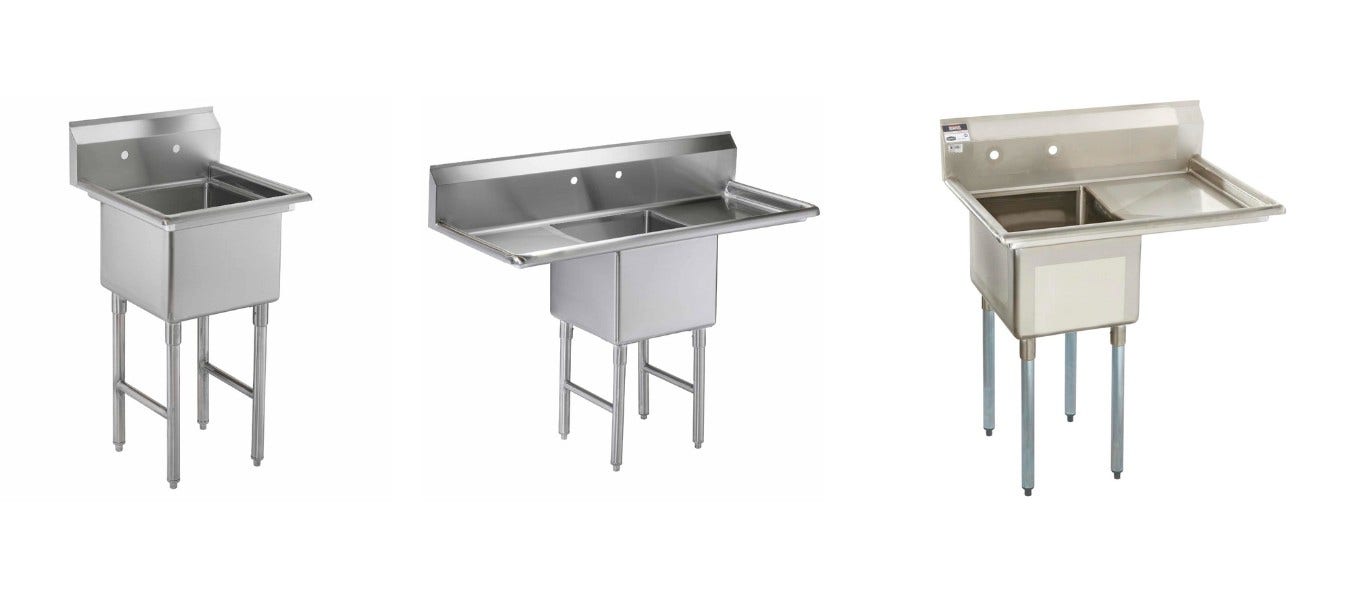
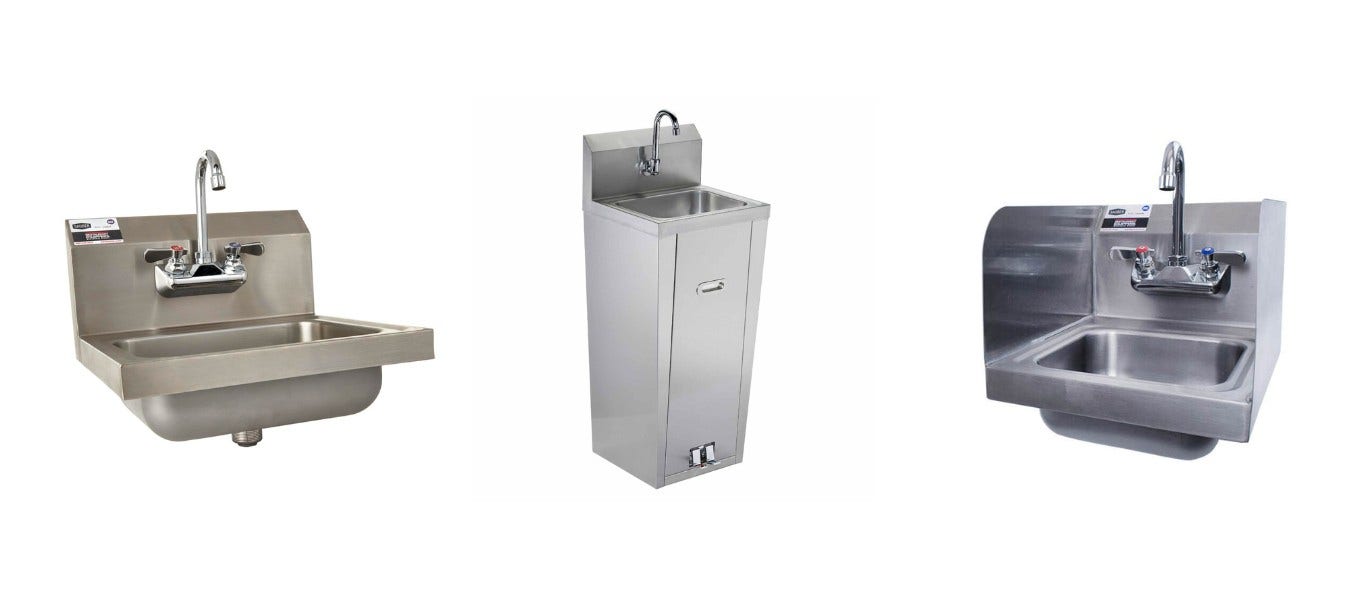
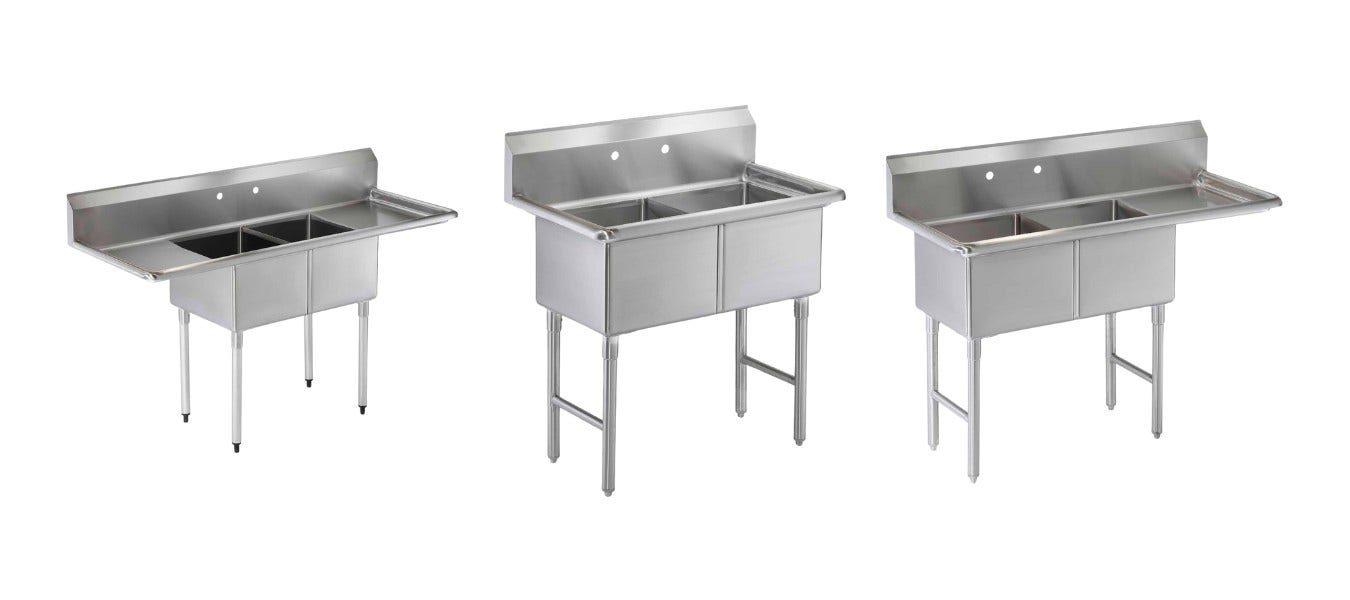
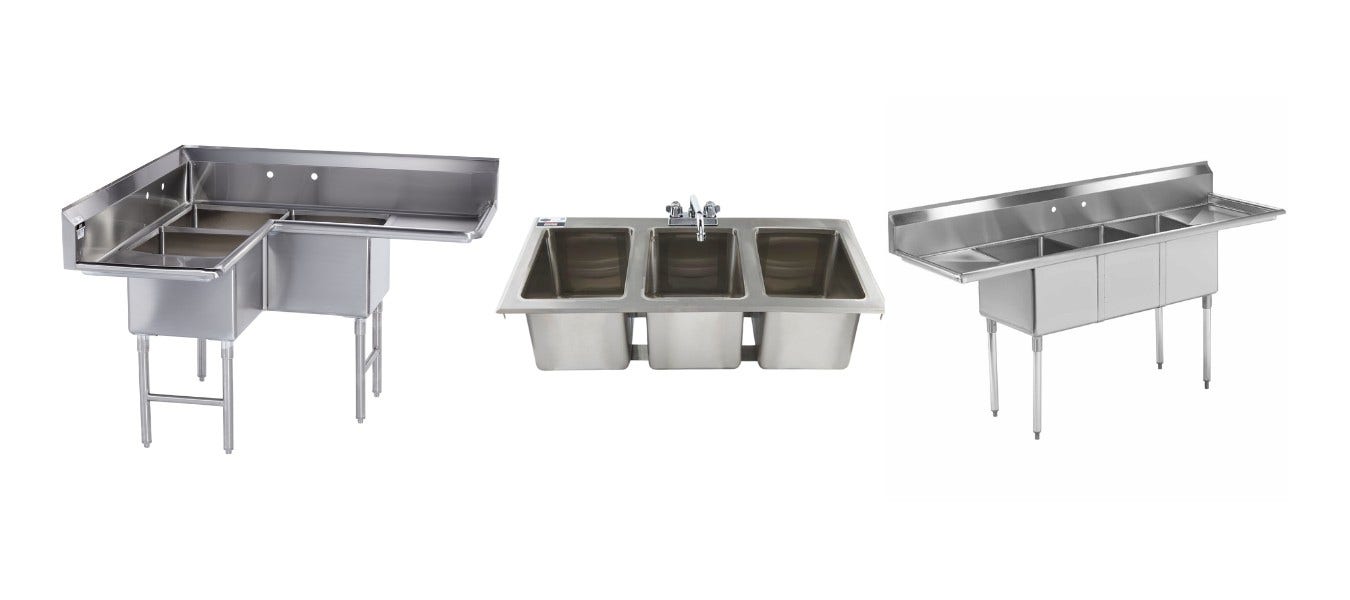


How Many Compartments Does Your Restaurant Sink Actually Need?
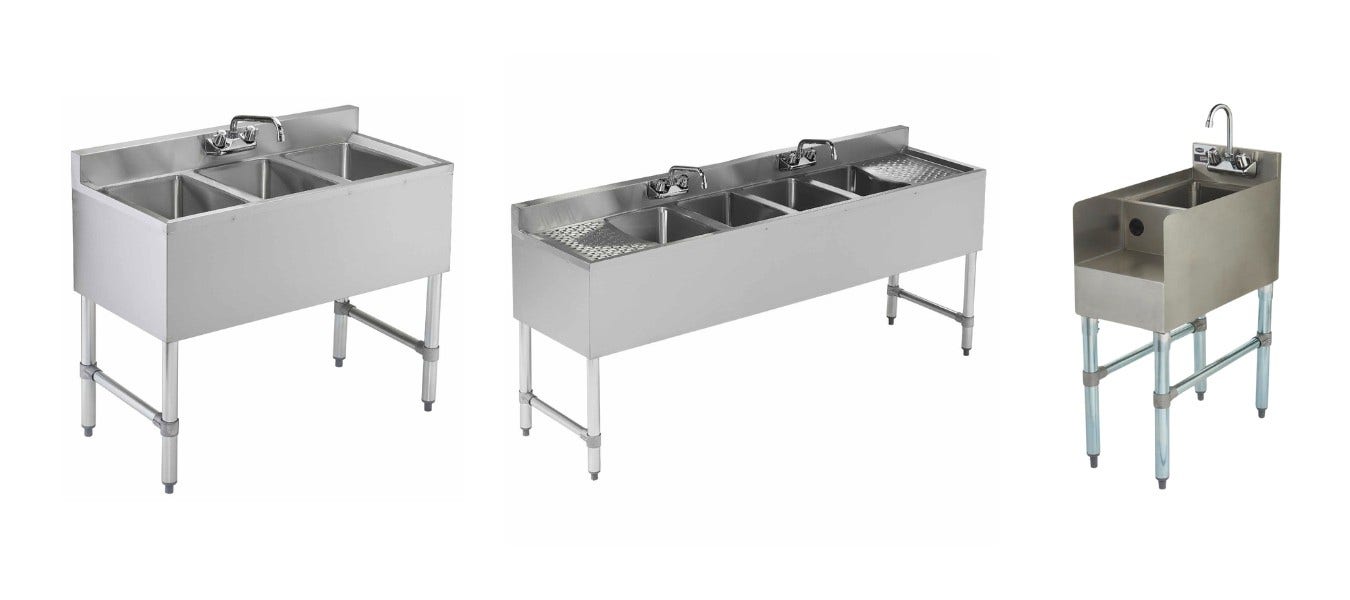
Most health departments require a three-compartment sink for washing, rinsing, and sanitizing when a kitchen doesn’t run a commercial dishwasher, so that's the standard for most restaurant sinks. Smaller operations like food trucks or coffee counters can sometimes get by with one or two compartments if their menu keeps manual dishwashing light.
Larger kitchens running multiple prep stations often add a fourth compartment or a second commercial sink altogether to keep food prep separate from dishwashing. Walk your kitchen layout and daily dish volume before deciding, since the wrong compartment count means re-plumbing later.
Reading Local Health Codes Before You Buy
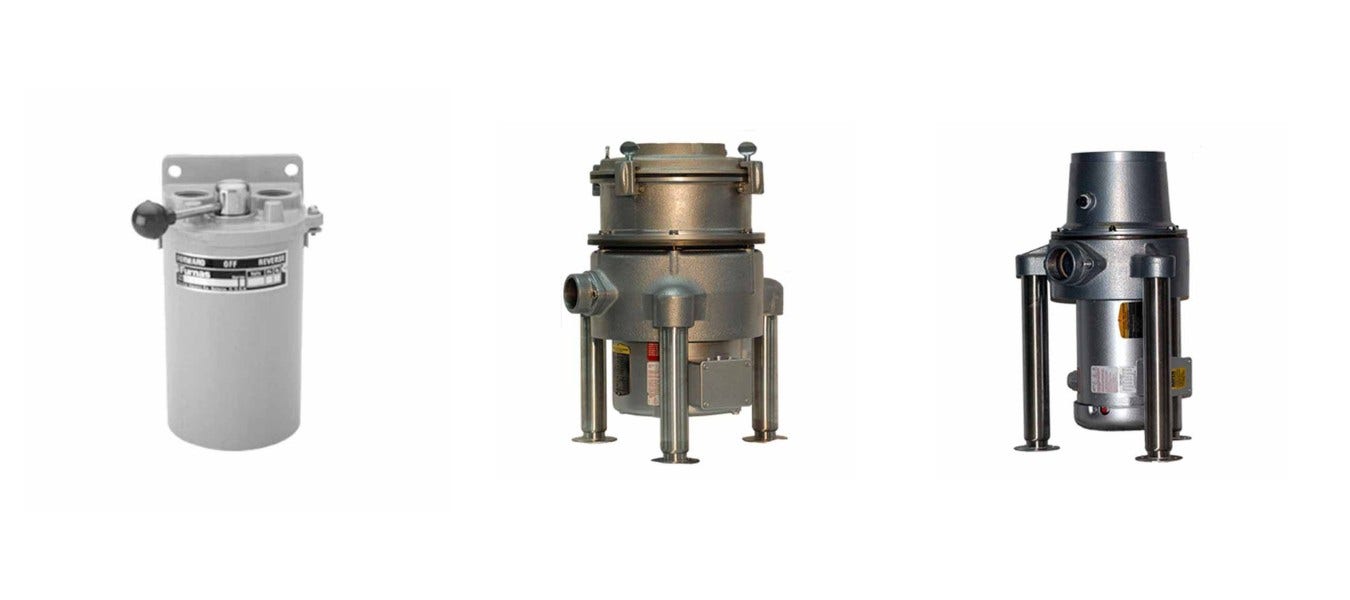
Compartment requirements, NSF certification, and drain configurations all vary by city and county, so check with your local health department before finalizing your sink specs. If you're also installing a commercial garbage disposal, confirm your jurisdiction allows one in a food-prep sink, since some codes restrict them to certain compartments only.
Stainless Steel Gauge and Grade: What "Commercial-Grade" Really Means
Gauge measures thickness, and a lower number means heavier, more dent-resistant steel, with 14-gauge holding up best under constant restaurant use.
Grade matters just as much: 304 stainless resists corrosion and pitting far better than 430, which explains why most stainless steel commercial sinks and stainless steel restaurant sinks built for daily kitchen use stick with 304. Cheaper gauges and grades might save money upfront but dent, rust, or fail inspection sooner.
Faucets, Drainboards, and the Details That Save Staff Time
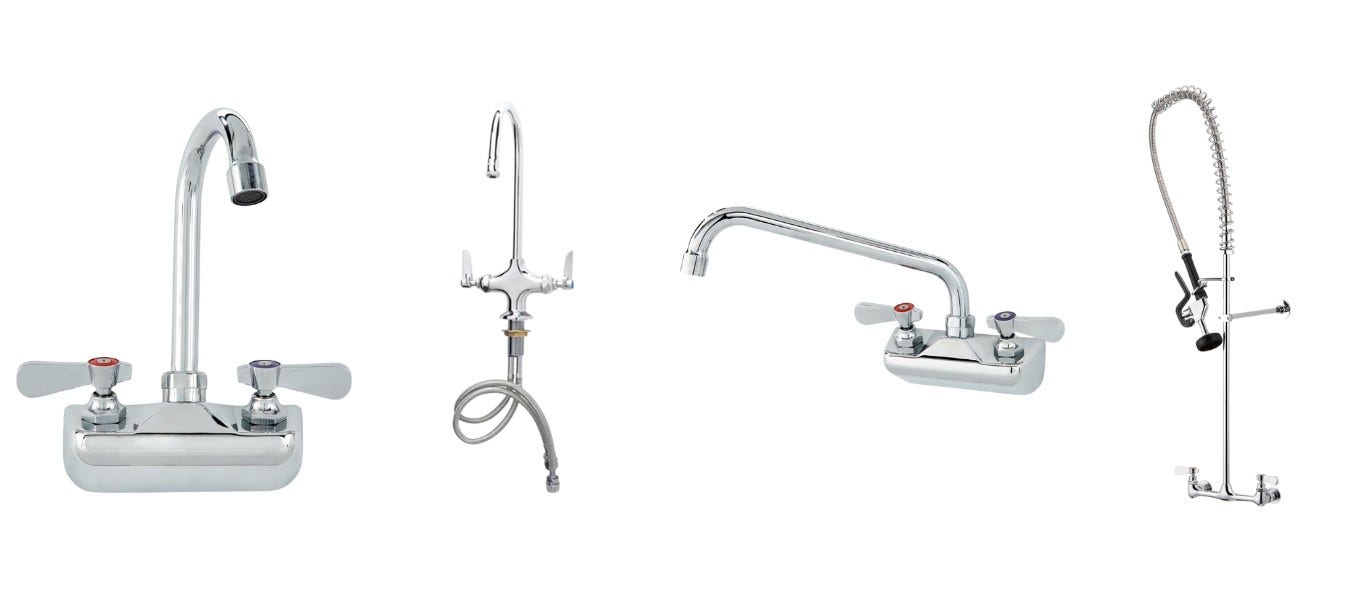
A commercial sink is only as functional as the faucet and drainboard attached to it, and small choices here add up to real time saved during a rush. Deck-mounted faucets keep plumbing simple, while wall-mounted models free up counter space for prep.
Drainboards direct clean and dirty dishes to the right side of the sink, keeping your workflow organized instead of stacked in a pile.
-
Choose deck-mounted faucets for straightforward installation, or wall-mounted for extra counter clearance
-
Match center-to-center spacing (commonly 4-inch or 8-inch) to your sink's existing plumbing inlets
-
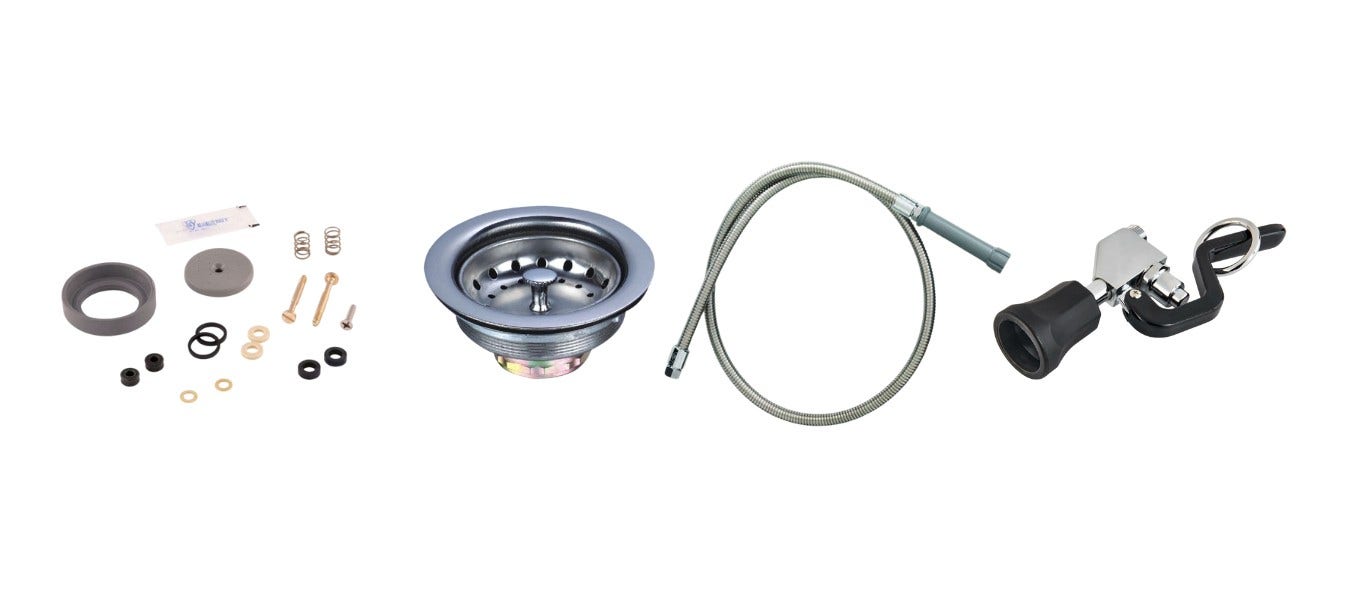
Add a pre-rinse spray assembly near your dishwashing station to knock off food before it reaches the wash cycle
-
Install hands-free, sensor, or foot-pedal faucets at handwashing stations if your local code requires them
-
Pick lever or twist drain valves over standard crumb cups for faster, safer draining between shifts
Commercial Sink and Faucet FAQs
How many compartments (one, two, or three) does my local health department require for my specific restaurant concept?
Requirements vary by county and concept, but a three-compartment sink is the most common baseline for full-service restaurants without a commercial dishwasher. Food trucks and small counters sometimes qualify for one or two, so confirm with your local health department first.
What gauge (14, 16, or 18) and type (304 vs. 430) of stainless steel do I need for maximum durability and corrosion resistance?
14-gauge, type 304 stainless steel offers the best combination of dent resistance and corrosion protection for daily commercial use. Thinner 18-gauge or 430-grade options cost less but wear faster under heavy service.
What dimensions (length, width, and depth) must the sink bowls be to completely submerge my largest pots, pans, and sheet trays?
Measure your largest sheet tray or stockpot and add a few inches of clearance on each side, since bowls typically run 10 to 24 inches deep depending on the model. A bowl too shallow or narrow forces staff to wash oversized items by hand elsewhere.
Do I need a configuration with left, right, or double drainboards, and how much clean/dirty landing space is required for our workflow?
Left, right, or double drainboards depend on which direction dishes flow through your station, and most kitchens need at least 18-24 inches of landing space on each side. Walk your actual workflow before choosing a side.
Is the sink NSF (National Sanitation Foundation) certified to ensure it passes local health inspections?
Yes, look for NSF certification on any commercial sink before you buy, since most health departments require it to pass inspection. Manufacturers usually stamp the certification directly on the unit or list it in the spec sheet
Find the Commercial Sink That Fits Your Kitchen and Code
An inspector doesn't wait for you to special-order the right compartment count or NSF-certified steel gauge. Restaurant Equippers keeps commercial sinks in stock across every configuration and grade your kitchen might need, so you're covered well before your next inspection date.
Shop our current selection today and get a commercial sink that keeps your kitchen running and your inspector satisfied.
Please complete your information below to login.
Sign In
Create New Account