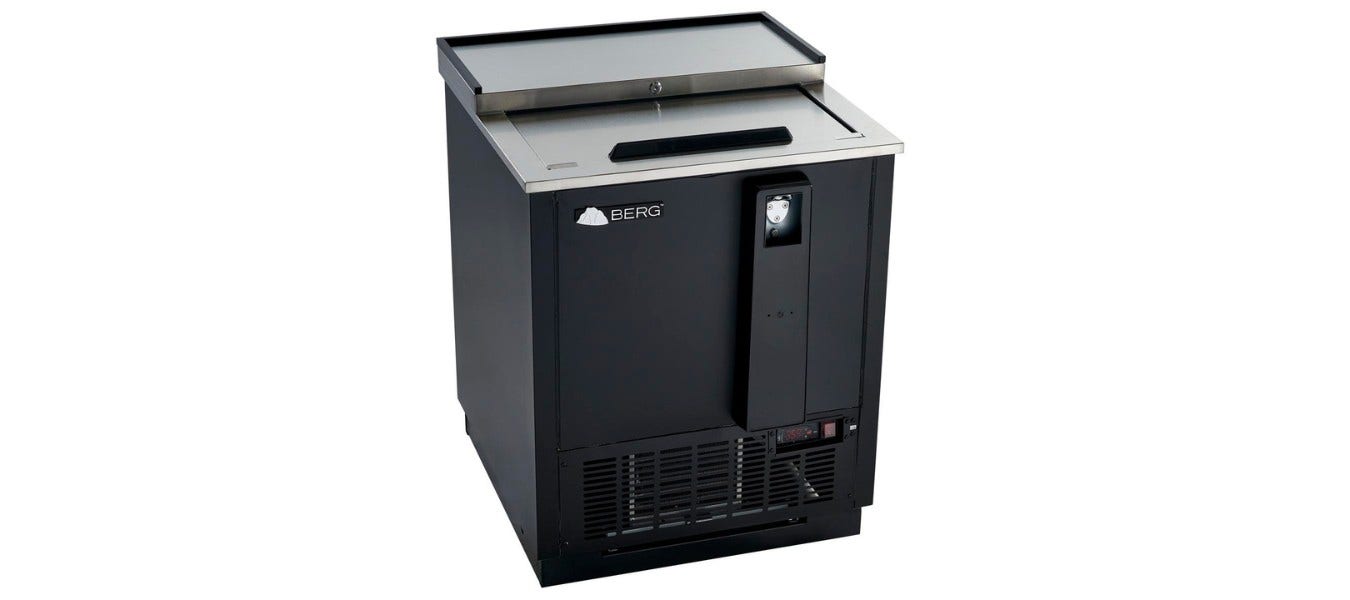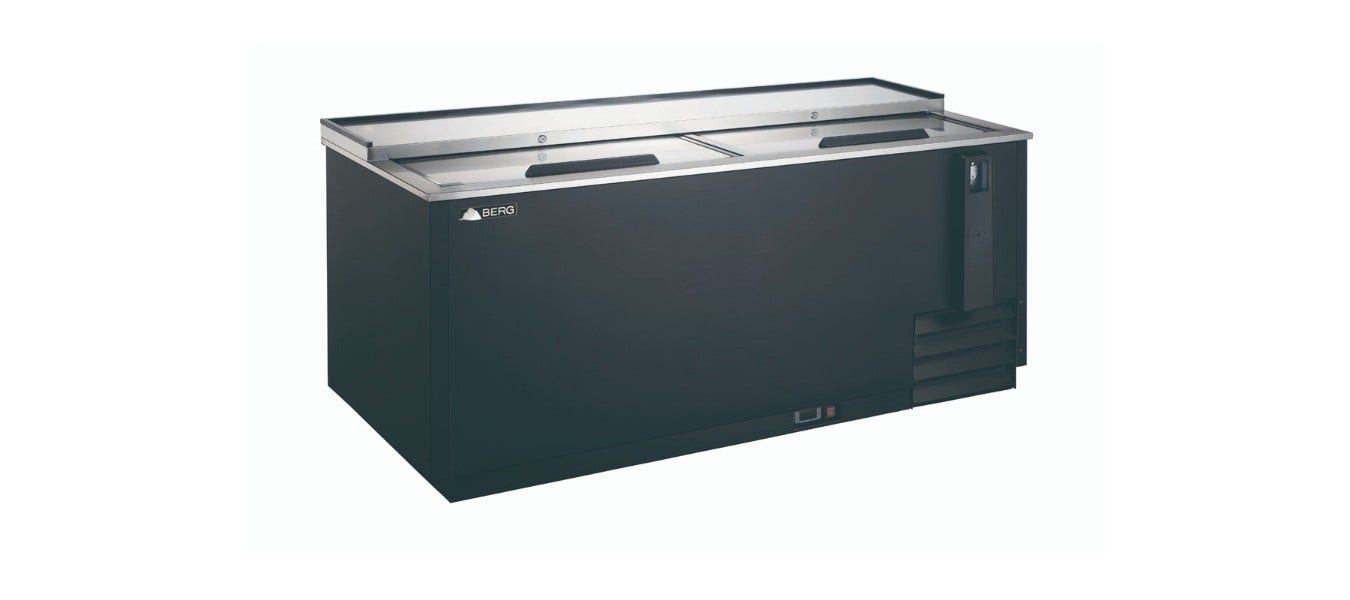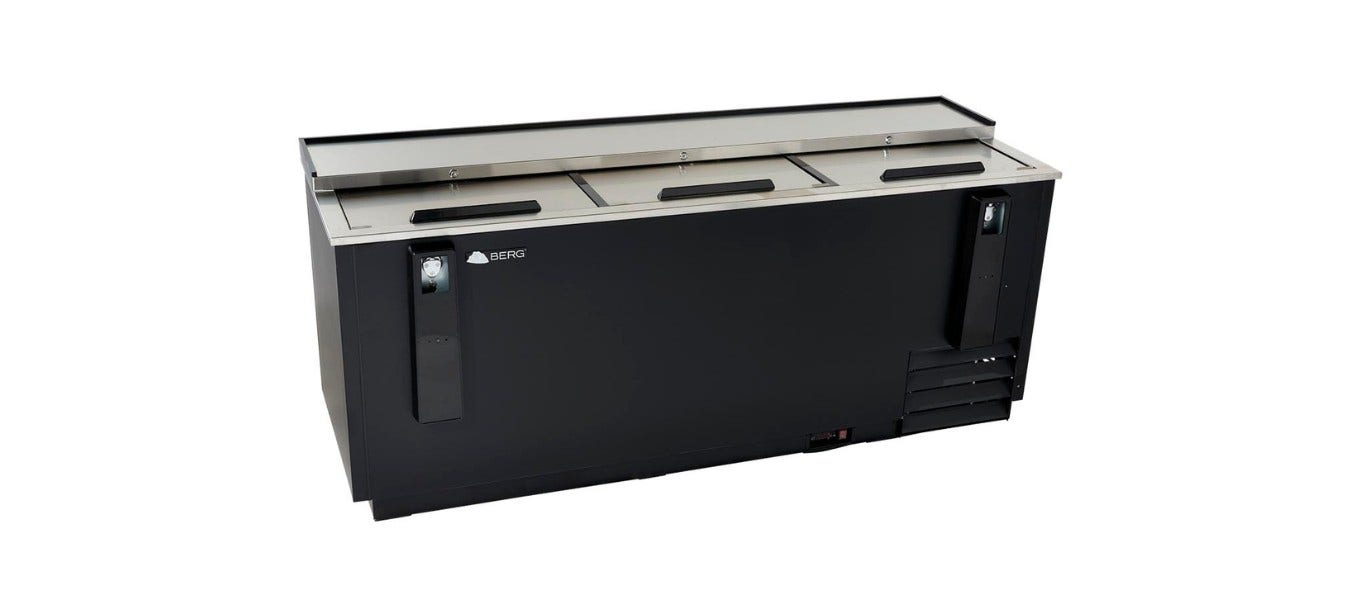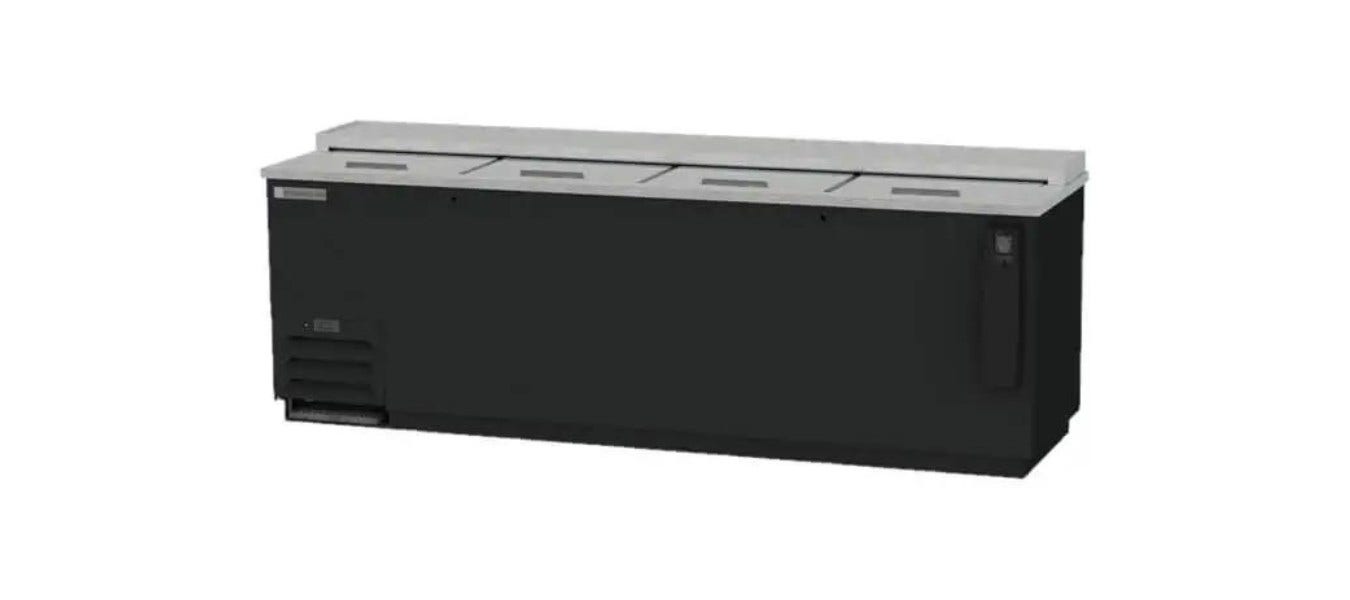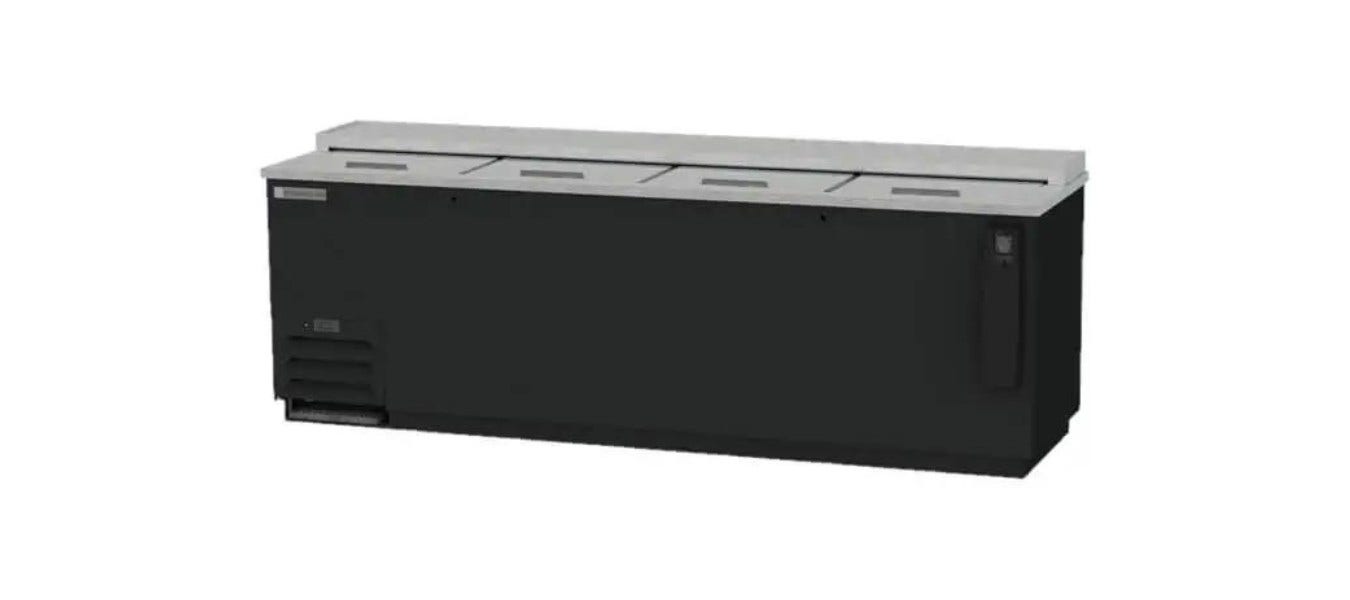
What Sets Commercial Bottle Coolers Apart from Standard Refrigeration
A bottle cooler is purpose-built to hold beverages at serving temperature with fast recovery after repeated door openings. Standard reach-in refrigerators store a mix of food and drinks at generally safe-holding temps, but commercial beer coolers prioritize rapid chilling, upright bottle organization, and easy access during high-volume service.
Heavier compressors, adjustable shelving spaced for bottles and cans, and reinforced door hinges built for constant use are what separate a commercial unit from a residential fridge.
Glass Door vs. Solid Door Bottle Coolers: Matching the Unit to Your Operation
Glass door bottle coolers put your full beverage selection on display, which works in customer-facing environments where visibility drives impulse purchases. Solid door back bar coolers hold temperature more efficiently and cost less to run, making them a better fit for staff-only access areas where nobody needs to see inside.
If your operation needs product visibility and energy savings, sliding glass doors offer a middle ground that cuts down on cold air loss every time someone reaches in.
Where Bottle Coolers Fit: Bars, Restaurants, Convenience Stores, and Beyond
Commercial beverage coolers show up in more places than most people realize. Any operation that serves cold drinks at volume can benefit from a dedicated bottle cooler:
- Bars that need bottled beer, wine, and mixers within arm's reach of the well
- Full-service restaurants holding backup beverage stock near server stations
- Convenience and concession operations running self-serve grab-and-go coolers
- Hotel lobbies and banquet facilities stocking water, juice, and soft drinks for events
- Grocery stores merchandising chilled drinks near checkout lanes
Getting the Longest Life Out of Your Commercial Beverage Cooler
Your commercial beverage cooler will run for years if you stay on top of a few basics. Keep condenser coils free of dust and buildup, inspect door gaskets for wear before they start leaking cold air, and avoid cramming shelves so tight that airflow gets blocked.
Position your bottle cooler away from cooking equipment and direct heat sources whenever possible, since a cooler working overtime against ambient kitchen heat burns through compressor life fast.
Bottle Cooler FAQs
What temperature should I set my bottle cooler to?
Most bottle coolers perform best between 33°F and 38°F. This range keeps beer, soda, water, and wine at ideal serving temperature without freezing anything inside the unit.
What is the difference between a bottle cooler and a back bar cooler?
A bottle cooler is a broad category that covers any commercial unit built to chill bottled and canned beverages. A back bar cooler is a specific style of bottle cooler sized and designed to fit behind a bar for bartender access during service.
How many bottles can a commercial beverage cooler hold?
Capacity varies by unit size. A single-door commercial beverage cooler typically holds between 100 and 200 bottles, while larger two- and three-door units can store 400 or more depending on shelf configuration and bottle size.
Are bottle coolers energy efficient?
Most modern commercial beer coolers use energy-efficient compressors and improved insulation that keep operating costs manageable. Solid door models tend to use less energy than glass door units since they retain cold air more effectively between openings.