Back to top

Roll-In Refrigeration

High-volume kitchens don’t have time to load a refrigerator one pan at a time. Roll-in refrigeration removes that step entirely. Your team rolls a full sheet pan rack directly into the unit, closes the door, and gets back to production. For bakeries, hotels, and high-output kitchens, this is what keeping pace with volume actually looks like.

Commercial stainless steel roll-in refrigerators on casters and built-in refrigeration units in a professional kitchen storage room.Commercial stainless steel roll-in refrigerators on casters and built-in refrigeration units in a professional kitchen storage room.

How Roll-In Refrigerators Handle High-Capacity Kitchen Output

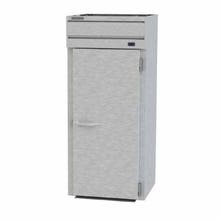
Roll-in refrigerators feature an oversized door opening and a shelving-free interior that lets a full sheet pan rack roll directly inside the unit without any unloading or restacking. 

Once the rack is in and the door closes, the unit holds standard refrigeration temperatures between 33°F and 41°F across the entire load at once. That means a full night's worth of dough, a catering order's worth of prepped product, or an entire batch of portioned proteins chills in one move rather than across a dozen trips to a  standard reach-in

High-output operations see real time and labor savings simply from eliminating the pan-by-pan transfer.

Rack Compatibility and Why Dimensions Matter Before You Buy

These types of fridges accept specific rack dimensions, and ordering the wrong size means the rack either won't clear the door or won't roll smoothly on the interior floor. 

Most full-size  roll-in units accommodate standard 26-inch by 29-inch sheet pan racks, but interior clearance varies by manufacturer, so measure your existing racks before you commit. If your operation runs half-size racks, confirm the unit is sized for that footprint rather than assuming a full-size unit will adapt.

Floor Access, Ramps, and Getting the Setup Right

Most roll-in refrigerators sit slightly above floor level, which means a ramp is required to bridge the gap between the kitchen floor and the unit’s interior for smooth rack entry. Some units include a ramp in the package and others sell it separately, so confirm what's included before your unit arrives. 

The floor surface in front of the unit also needs to be level and clear of transitions, as a tile-to-mat seam or uneven flooring directly in the rack's path creates friction, makes rolling difficult, and can misalign the rack inside the unit.

Choosing the Right Roll-In Refrigerator for Your Operation

Roll-in refrigeration is a significant equipment investment, and the right unit depends on your rack size, your production volume, and how your kitchen is laid out. Nail these specs before you order:

  • Rack size compatibility: Measure your existing sheet pan racks first. Interior width, depth, and door opening must all accommodate your rack with room to spare.

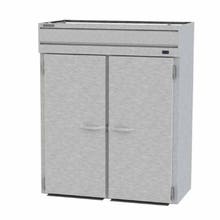
  • Single vs. double rack capacity: Single-rack units work for most operations. High-output kitchens running multiple production shifts may need a double-rack unit to keep pace.

  • Ramp inclusion: Confirm whether the ramp ships with the unit or is sold separately. Budget for it either way: the rack cannot enter without one.

  • Refrigerator vs. freezer configuration: Roll-in units come in both. Bakeries typically need refrigeration for dough and prepped product; operations managing rapid cool-down may need a roll-in freezer.

  • Door hinge direction: Confirm the door hinges on the correct side for your layout before ordering. Some models offer reversible hinges.

FAQs About Roll-In Refrigerators

Do roll-in refrigerators require a floor ramp?

Yes. The interior floor of a roll-in refrigerator sits slightly higher than the kitchen floor, and without a ramp the rack won't transition into the unit smoothly. Most manufacturers offer a ramp built for their specific model's threshold height. Using a generic ramp that doesn't match can create an uneven entry that damages rack wheels over time.

Can I roll any standard sheet pan rack into a roll-in refrigerator?

Not necessarily. Rack height matters just as much as footprint:  a rack that's too tall won't clear the top of the door opening even if the base dimensions look right. Most roll-in units list a maximum rack height in their specs. Verify height, width, and depth against your specific rack before ordering.

Can a roll-in refrigerator be used to cool down hot foods?

Technically yes, but with caution. Rolling hot food directly into a standard roll-in forces the compressor to work significantly harder and can compromise the safety of other product stored in the unit. FDA food code requires hot foods to reach 70°F within two hours of cooking. Cool product to at least that threshold first, or use a roll-in blast chiller built specifically for rapid cool-down.

Shop Top-Performing Roll-In Refrigeration at Restaurant Equippers Today

Outfitting a high-volume kitchen with roll-in refrigeration involves more than picking a unit size. Restaurant Equippers' staff can walk you through specs, rack compatibility, and installation requirements before you commit. We're a BBB Accredited Business with over 60 years of experience helping operators get the right equipment the first time.

RECOMMENDED FOR YOU